January 15–February 21, 2026
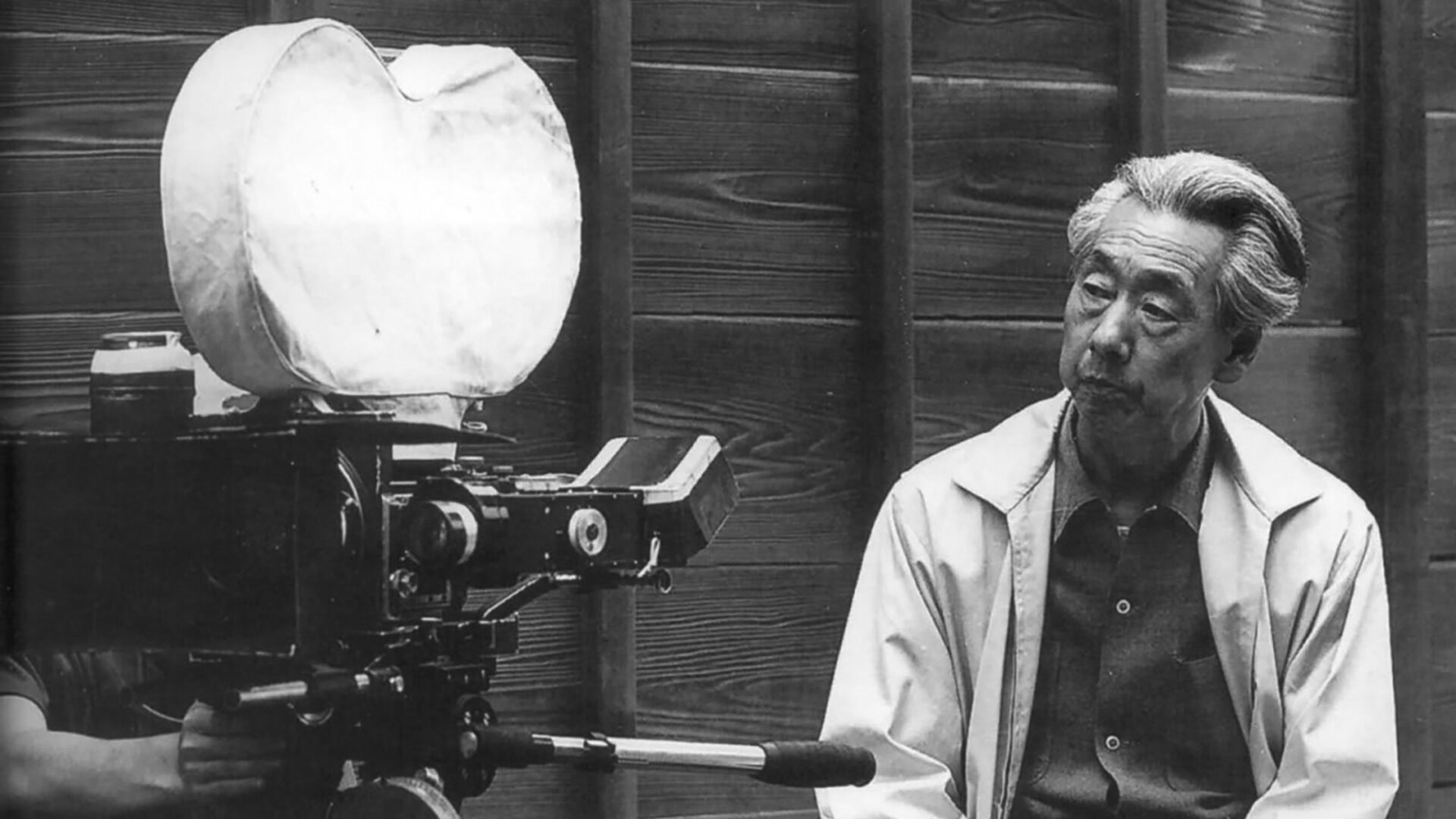
Short Is the Life of a Flower: The Films of Naruse Mikio
“Naruse Mikio stands shoulder to shoulder with the greats of Japanese cinema, even as the bulk of his work remains difficult to see in the West.”
Matthew Thrift, BFI
“From the earliest age, I have thought that the world we live in betrays us.” This sentiment from Naruse Mikio (1905–1969), a pivotal figure of the mid-century’s golden era of Japanese cinema, serves as a keystone for appreciating the despairing—if not simply honest—narrative universe of the esteemed studio director.
A master chronicler of common life in the shoshimin-eiga tradition, Naruse, like contemporary Mizoguchi Kenji, is celebrated for his nuanced treatment of female characters made to suffer in a society wrought by patriarchy and capitalism. Unlike Mizoguchi—or admirer Ozu Yasujiro, whose portraits of domesticity are superficially compared to Naruse’s—the filmmaker never reached the international heights of his more renowned peers, a symptom, perhaps, of his romanceless approach to melodrama, or the lack of a strong formal signature that may otherwise distinguish an “auteur” from a workaday director. (Edward Yang, for one, praised the “invisibility” of the Naruse style, while Kurosawa Akira, who mentored under Naruse in the 1930s, saw the fluidity of his shots and scenes as a surface-level calm under which a “fast-raging current” resides.)
What is certain is that Naruse, a self-described “old schooler” indifferent to the industry’s embrace of colour and widescreen (though he eventually operated in both modes), was remarkably progressive in his gender politics and desire to centre the livelihood of women in his work. Novelist Hayashi Fumiko served as his literary muse; Naruse adapted six of her books across his most productive and artistically fertile period. This commenced with the critical success of Repast (1951), based on Hayashi’s unfinished final novel, and concluded with A Wanderer’s Notebook (1962), an adaptation of her autobiography. That Takamine Hideko would portray Hayashi in the latter is only fitting—she was the actor most associated with the “women’s film” director, starring in 17 of his works including triumphs Floating Clouds (1955) and When a Woman Ascends the Stairs (1960), both notably derived from Hayashi stories.
A model director at Toho for delivering modestly budgeted films on time that turn a profit—his previous studio Shochiku supposedly ousted him for being too Ozuesque—Naruse has witnessed his stock and the reverence for his work rise in recent years. Material access to his films outside Japan, however, continues to lag behind. We last mounted a Naruse retrospective in 2006, part of a touring exhibition to mark his centenary, supported by the Japan Foundation and featuring 35mm prints imported from Tokyo. Twenty years later, Naruse returns to The Cinematheque for his 120th anniversary under almost identical circumstances—only this time, he’s less the “Unknown Japanese Master” we previously observed.
Spanning a dozen films from across the director’s iconic postwar period, “Short Is the Life of a Flower” draws its elegiac title from a Hayashi passage that features in Naruse’s best known (and arguably best, full stop) picture, Floating Clouds. The remaining quote—“yet so many hardships it suffers”—speaks volumes on the solemn worldview of its author, and why Naruse discovered in her a kindred poet of life’s fragile beauty and unexceptional cruelty. Our series will open with that melancholic 1955 masterwork, introduced by Naruse scholar Catherine Russell in a prerecorded video, and close with the director’s devastating final statement, Scattered Clouds (1967).
“Naruse’s is a strikingly modern cinema … Structuring his films as unpredictable journeys, Naruse employs a subtlety of composition that makes the graphics of the camera angle itself visible as a form of movement.”
Chris Fujiwara, Film Comment
“His films celebrate, without extravagance, the lives of ordinary people struggling for something better than the hand fate has dealt them … They raise the ordinary and even the sordid to a quality near sublime.”
Audie Bock, Artforum
“For many, [Naruse] still remains to be discovered … [But] among certain circles of online cinephiles, whose tastes tend to champion underdogs over established names, Naruse is granted more and more a place of importance.”
Jonathan Mackris, Screen Slate
Acknowledgments
For their invaluable assistance coordinating this touring retrospective, The Cinematheque would like to thank Yuki Hasegawa and Yixun Zhang, Japan Foundation, Toronto; Alexander Fee, Japan Society; Edo Choi, Metrograph; Kathryn MacKay, BAMPFA; Haden Guest, Harvard Film Archive; Robyn Citizen and Amanda Brason, TIFF Cinematheque; Heather Noel, Metro Cinema; and Brian Belovarac, Janus Films.
“Short Is the Life of a Flower: The Films of Naruse Mikio” is generously supported by the Japan Foundation, Toronto. 35mm prints are provided by the Film Library of the Japan Foundation’s headquarters in Tokyo.

Media
List of Programmed Films
| Date | Film Title | Director(s) | Year | Country |
|---|---|---|---|---|
| 2026-Jan | Floating Clouds | Naruse Mikio | 1955 | Japan |
| 2026-Jan | Repast | Naruse Mikio | 1951 | Japan |
| 2026-Jan | Mother | Naruse Mikio | 1952 | Japan |
| 2026-Jan | Wife | Naruse Mikio | 1953 | Japan |
| 2026-Jan | Lightning | Naruse Mikio | 1952 | Japan |
| 2026-Jan | Late Chrysanthemums | Naruse Mikio | 1954 | Japan |
| 2026-Jan | Sound of the Mountain | Naruse Mikio | 1954 | Japan |
| 2026-Feb | Flowing | Naruse Mikio | 1956 | Japan |
| 2026-Feb | When a Woman Ascends the Stairs | Naruse Mikio | 1960 | Japan |
| 2026-Feb | Yearning | Naruse Mikio | 1964 | Japan |
| 2026-Feb | Scattered Clouds | Naruse Mikio | 1967 | Japan |
| 2026-Feb | A Wanderer’s Notebook | Naruse Mikio | 1962 | Japan |